
 by
by 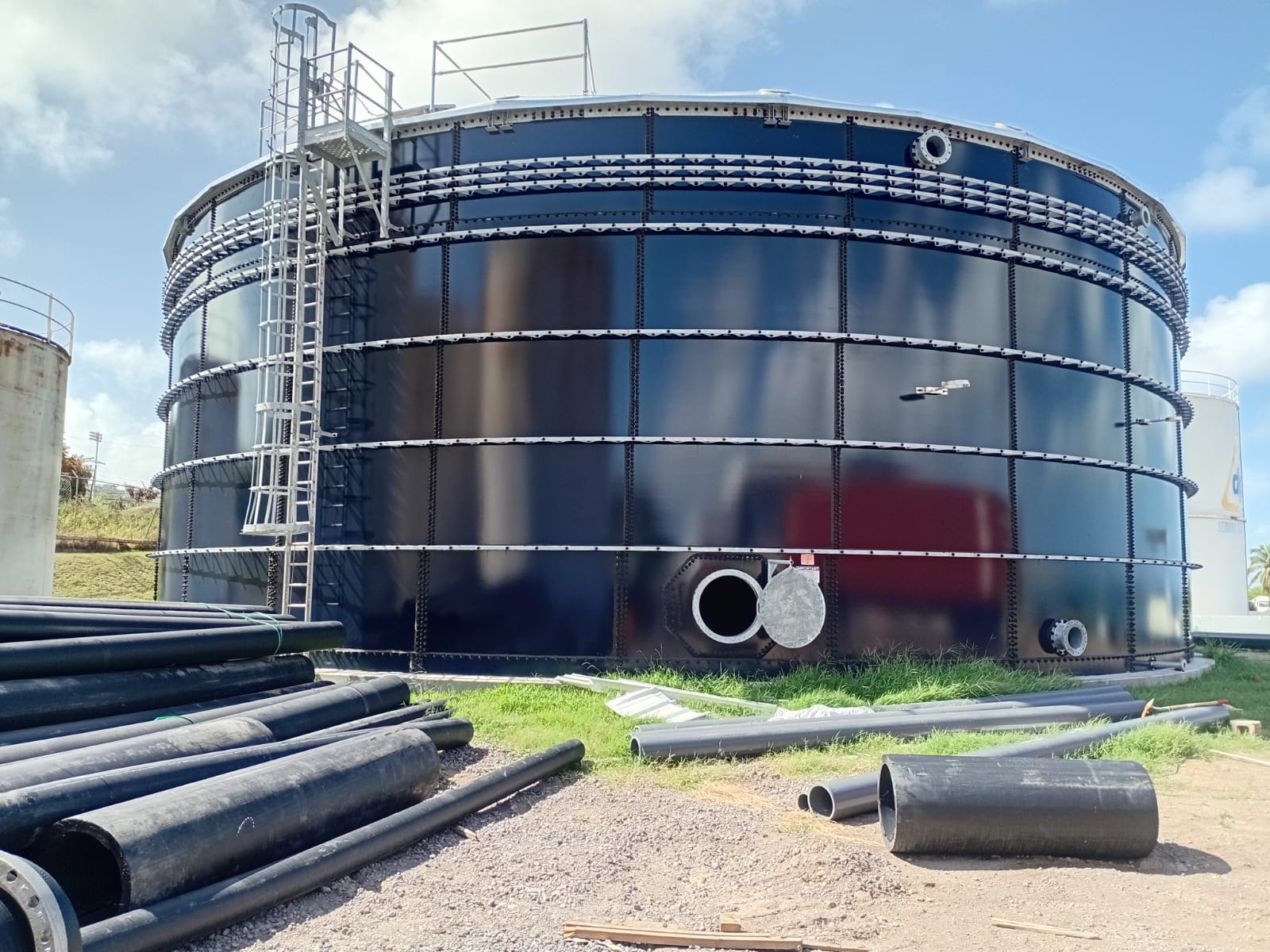
St. Kitts is a small island. You can drive around the whole thing in a few hours. It has one main mountain, one main road along the coast, and fewer than 50,000 people. For most of its history, it also had something many bigger countries take for granted: enough water. Rain fell on the mountain, filled the springs and wells, and everyone had what they needed.
Then the rain began to fail.
The drought no one saw coming
The first serious drought in the island’s modern history arrived in 2015. That may sound recent, and it is. A government climate officer later said that before 2015, the country had never really faced water problems at all. The island’s whole water system was built on one assumption, that the rain would always come, and for centuries that assumption held.
Climate change broke it. Over the next ten years, the wet seasons became shorter and less predictable. Dry spells stretched longer. A weather pattern called El Niño made things worse, bringing hotter temperatures and even less rain. And a quieter problem was growing underground: as the wells were pumped harder to make up for the missing rain, salt water from the sea began to creep into the island’s underground fresh water.
By 2026, the government was describing the situation as the worst drought in the country’s recorded history, possibly the most severe since the 1920s. Prime Minister Dr. Terrance Drew said projections showed St. Kitts was on the way to becoming one of the most water-scarce countries on the planet. Large parts of the island were losing water on a regular basis. The Water Services Department had to ration supply, limiting when and how much water people could use. For a country that had never worried about water, it was a shock.
What the shortage was like day to day
In most areas, the pattern was the same. There was water through the day, but by seven in the evening the pressure would start to drop, and by eight or eight-thirty the water was gone for the night.
People adjusted their routines around that schedule. Households without storage tanks filled five-liter bottles and buckets before evening. Some kept fifty-five gallon food drums filled at home. Anyone who worked out in the afternoon had to be home and showered before eight, because if nothing had been filled that morning, there was no washing up that night.
A choice: wait for rain, or make water
The island’s engineers understood something important about the crisis. It was not a storage problem. St. Kitts had tanks and reservoirs. The problem was supply. The springs and wells simply did not produce enough anymore, because the rain that fed them no longer fell the way it used to.
That understanding shaped the answer. If rain could not be trusted, the island needed water that did not depend on rain at all. And there was one source of water St. Kitts would never run out of: the sea around it.
The government committed about EC$100 million (about US$37 million) to a new water plan. The centerpiece was a desalination plant in Basseterre, the capital, a project this site followed from its first power-up. Desalination is the process of taking sea water and removing the salt until it becomes clean drinking water. The plant was built with funding support from the Republic of China (Taiwan) and run by Royal Utilities, a company that had quietly operated a smaller desalination plant on the island for more than twenty years, supplying the Marriott hotel without a single major failure in all that time. The partnership between the government and Royal Utilities was first announced back in 2023, when the plan was to pump 300,000 gallons a day into the Frigate Bay network.
The new plant was commissioned in February 2026. It produces two million gallons of fresh water every day, no matter what the sky does. Just as important, it allowed the island to ease off its underground wells, giving the aquifer a chance to recover and pushing back against the salt water that had been creeping in.
The turnaround
The change came quietly. About a month before the plant was officially announced as online, the evening cutoffs stopped in many areas. The pressure held through the night, and after a while people stopped filling bottles.
Basseterre, the capital, returned to water 24 hours a day. So did Frigate Bay, Half Moon, and Bird Rock, the areas where most visitors, students, and new residents live. By mid-2026, the government reported that about 70% of the island had reliable round-the-clock water, an increase of roughly 50% in under four years.
Prime Minister Drew put it plainly: had the island not acted when it did, it would have run out of water during the worst of the drought.
And the work did not stop with the sea. In August 2026, the island announced its first success in a new campaign to find water underground. A new well at Saddlers, in the north, struck water at around 500 feet and produces roughly 175 gallons per minute, several times more than the area’s old supply. It is the first of a series of wells planned over about 18 months, aimed at the villages that have waited longest for reliable service. The goal is water all day for nearly the entire island.
Why this story matters beyond St. Kitts
Small islands are on the front line of climate change. They feel rising seas, stronger storms, and failing rain before anyone else, and they usually have the least money to respond with. Reports from the United Nations have warned that small island nations need billions of dollars a year to adapt, and most of them cannot get anywhere near that.
That is what makes the St. Kitts story worth telling. A country of fewer than 50,000 people looked at projections that said it was running dry, and instead of waiting, it built its way out, using the one resource it had in endless supply. The water plan is also part of a wider effort to modernise the island’s infrastructure, alongside a push into renewable energy. The job is not finished. Some villages are still waiting for full service, and the wells are still being drilled. But the direction has changed, and the island that once depended entirely on rain no longer does.
For anyone thinking about living in St. Kitts, the practical side of this story, including which neighbourhoods now have 24-hour supply, is covered in our guide: Does St. Kitts Have Reliable Water? What Buyers and Renters Need to Know in 2026. And for anyone simply watching how small places handle big climate problems, St. Kitts has become a quiet example of getting it right.
SKN Real Estate is a licensed brokerage based in Basseterre, St. Kitts. For questions about living on the island, email us at info@sknrealestate.com