
 by
by 
If you have spent any time in digital nomad forums or Facebook groups recently, a theme keeps surfacing. People who have done Bali for a year or two are done with it. People who got excited about Portugal’s D8 visa are hitting the income threshold wall. And a growing number of remote workers are asking a question nobody was really asking three years ago: is there somewhere English-speaking, genuinely tax-free, close to the US, and not yet completely overrun?
There is. It just does not get talked about much yet. That is about to change.
What is actually happening in Bali right now
Bali has been the default answer to “where should I go as a digital nomad?” for the better part of a decade. The case made sense: cheap accommodation, beautiful scenery, a ready-made nomad community in Canggu and Ubud, and a cost of living that let you live well on a modest income.
That case is getting harder to make in 2025 and 2026.
What once felt like the ideal remote-work lifestyle, surf breaks, rice-terraced backdrops, coworking over coconuts — has started to wear thin even for staunch Bali advocates. As more foreigners arrived, housing prices surged in hubs like Canggu and Ubud, and locals and expats alike point to inflation in imported goods, nomad-targeted cafes, and visa uncertainties as driving up weekly living costs.
The visa situation in particular has become genuinely exhausting. Unless you are Indonesian or have a business visa, you are doing visa runs every 30 to 60 days — hopping on a plane to Singapore, Kuala Lumpur, or Bangkok, turning around, and coming right back. Each trip costs anywhere from $200 to $500 depending on how last-minute you book.
The classic digital nomad in Bali often operates in a legal grey area: no company registration, no tax ID, and no work permit, but staying six months or longer on visa extensions or visa runs. If immigration checks your activity or something goes wrong, visa expiry, legal dispute, medical emergency, the lack of legal structure can create serious problems.
Indonesia launched the E33G Remote Worker Visa in 2024, which does provide proper legal status. But the minimum annual income requirement is USD $60,000, and the visa is not open to freelancers, you must have an existing contract with a foreign employer. That rules out a significant portion of the remote worker population before they even start the application.
The result is that many digital nomads are moving on in search of more sustainable, stable, and legally secure homes.
What is actually happening in Portugal
Portugal was supposed to be the answer to Bali’s problems. Proper legal status, EU infrastructure, proximity to the rest of Europe, and the old Non-Habitual Resident tax regime that used to make the finances work beautifully.
That picture has changed significantly.
To obtain Portugal’s D8 Digital Nomad Visa, applicants must show a monthly income of at least €3,680 from sources outside Portugal and at least €11,040 in their savings account. At current exchange rates that income requirement is roughly US$4,000 per month — a threshold that eliminates a large share of the remote worker population who earn well but not at that level.
Portugal’s Non-Habitual Resident tax regime, which allowed new residents to benefit from generous tax breaks for up to 10 years, ended for most new applicants on January 1, 2024. Without NHR, remote workers and digital nomads under the D8 visa are taxed under Portugal’s standard personal income tax system, which is progressive up to 48%.
And if the citizenship pathway was part of your long-term thinking: as of October 2025, Portugal’s parliament extended the residence requirement for citizenship from five years to ten years. So the route that made Portugal strategically compelling for many applicants has become significantly longer.
Portugal is still a genuinely nice place to live. But the financial case that made it a go-to destination three or four years ago has eroded substantially.
So where does that leave you?
The honest answer is that the popular options have gotten harder. Bali involves legal uncertainty and constant visa management. Portugal requires high income and, now, normal European tax rates. Spain, Estonia, Croatia, and Malta all have their own thresholds, processing times, and local tax implications to navigate. And most of Southeast Asia’s alternatives, Vietnam, Thailand, the Philippines come with the same language barrier and legal grey area issues that Bali has.
What most nomads actually want is deceptively simple: somewhere warm, English-speaking, with reliable internet, no income tax on foreign earnings, direct flights home, and the ability to stay legally without jumping through bureaucratic hoops every few months. That combination is rarer than you would think.
Why St. Kitts fits that description
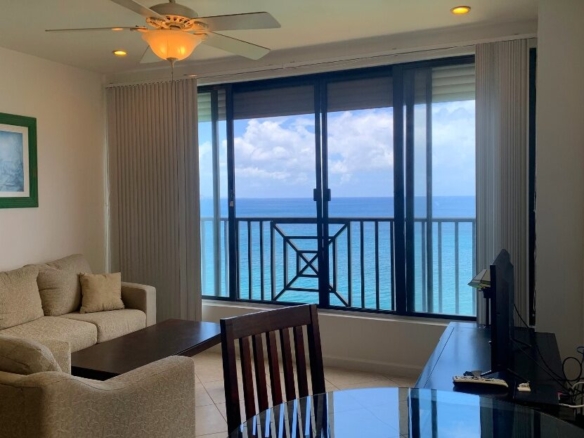
St. Kitts is a small English-speaking Caribbean island three hours and fifteen minutes from Miami. It does not have a dedicated digital nomad visa programme and that turns out to be one of its strengths.
You do not need a visa application to start. Citizens of the US, UK, and Canada enter on an eTA, approved in minutes for US$17, with up to 90 days permitted on arrival. No income threshold, no employer letter, no criminal record certificate submitted in advance, no waiting period. You arrive, your apartment is ready (you secured it remotely before you flew out), and you start working.
There is no personal income tax. Not a low rate. Not a reduced rate for the first ten years. Zero. St. Kitts and Nevis imposes no personal income tax, no capital gains tax, no wealth tax, and no inheritance tax. For a remote worker earning US$6,000 a month from overseas clients, the tax saving versus living in Portugal under the current standard rate is substantial. Americans still file with the IRS on worldwide income, but the Foreign Earned Income Exclusion — up to US$130,000 for 2025 – means most remote workers earning at moderate levels owe nothing federally either.
You can stay longer term without the visa-run treadmill. For stays beyond 90 days, the Temporary Residency pathway through the Ministry of National Security is available to anyone who owns or rents property and does not intend to work locally. It is not a complex application. It does not have an income minimum of €3,680 per month. It is a straightforward residency status that lets you live on the island legally with your existing overseas income. Annual Residency is available for those who need the right to work.
The government is actively considering a formal digital nomad programme. St. Kitts is already aware of the gap in its offering and discussions are ongoing at government level about formalising remote worker pathways. The infrastructure — direct flights, reliable internet in the main areas, zero income tax, English language – is already in place. The formal label is a matter of timing.
The internet is reliable where it matters. Flow and Digicel both serve Frigate Bay and the main residential areas with broadband sufficient for video calls, cloud work, and client meetings. This is not a destination where you hope the connection holds during a Zoom call.
You are three to four hours from the East Coast of the US. This is the factor that makes St. Kitts genuinely different from Bali or any Southeast Asia alternative for North American remote workers. Staying on Atlantic Standard Time – UTC-4 – means you overlap naturally with US and Canadian business hours. Client calls are normal hours, not 10pm or 6am. The time zone adjustment alone, for anyone with North American clients, is a significant quality-of-life improvement over Southeast Asia.
Direct flights from the US, UK, and Canada. American Airlines flies from Miami, Charlotte, and New York. Delta from Atlanta and New York. JetBlue from New York. Air Canada from Toronto. British Airways from London Gatwick. You are not spending two days in transit to get home for a wedding or a family emergency
What you are trading
It would be dishonest not to say this clearly. St. Kitts is a small island. The population is around 48,000 people. There is no coworking scene comparable to Canggu’s dozens of cafes and shared workspaces. There is no equivalent of Lisbon’s nomad events circuit and tech startup ecosystem. Shopping is limited and imported goods carry the cost of their journey. Cars are expensive to buy. Nightlife is centred on Frigate Bay’s Strip rather than a city.
If what you want from a nomad base is a large, cosmopolitan city with hundreds of fellow remote workers to network with and a constant stream of conferences, meetups, and social events, St. Kitts is not that place.
What it is, for the right person, is something arguably better: a genuinely calm, beautiful, English-speaking island where you work well, live comfortably, pay no income tax, reach home easily, and feel like you are actually living rather than managing the logistics of staying.
A realistic comparison
| Bali (E33G visa) | Portugal (D8 visa) | St. Kitts | |
|---|---|---|---|
| Income requirement | US$60,000/year minimum | ~US$4,000/month minimum | None |
| Application process | 4 – 6 weeks, agency often needed | 8 – 12 weeks consulate process | eTA in minutes; Temp Residency straightforward |
| Legal status | Clear under E33G; grey area otherwise | Clear | Clear |
| Income tax | 0% if income offshore; Indonesian tax if resident 183+ days | Up to 48% standard rate (NHR ended 2024) | 0% |
| Language | Indonesian (English in tourist areas) | Portuguese | English |
| Flight time from US East Coast | 22 – 24 hours | 7 – 9 hours | 3 – 4 hours |
| Time zone vs US East | +11 to +13 hours | +5 to +6 hours | Same or +1 hour |
| Internet (main areas) | Generally reliable in Canggu | Strong across Lisbon, Porto | Reliable island wide |
| Monthly all-in cost (comfortable) | US$1,100 – US$1,800 | US$2,500 – US$4,000+ | US$2,400 – US$3,500 |
The practical path for a remote worker moving to St. Kitts
- Browse current listings at SKN Real Estate – Frigate Bay one-bedrooms from US$1,200/month furnished, all utilities questions answered upfront
- Arrange a live video viewing via WhatsApp with an agent
- Sign the lease and transfer the deposit to secure the unit before you fly
- Apply for the eTA at knatravelform.kn — takes five minutes, US$17 fee
- Arrive, collect your keys, set up SKELEC electricity and a Flow or Digicel internet connection (if not already included in the rent)
- Begin Temporary Residency application in your first month if staying beyond 90 days
That is it. No income threshold to clear, no consulate appointment to book months in advance, no visa agency to pay, no employer letter to chase down. You can be living and working legally in St. Kitts within weeks of deciding to make the move.
Last updated: March 2026 | SKN Real Estate – browse current Frigate Bay and island-wide listings at sknrealestate.com