
 by
by 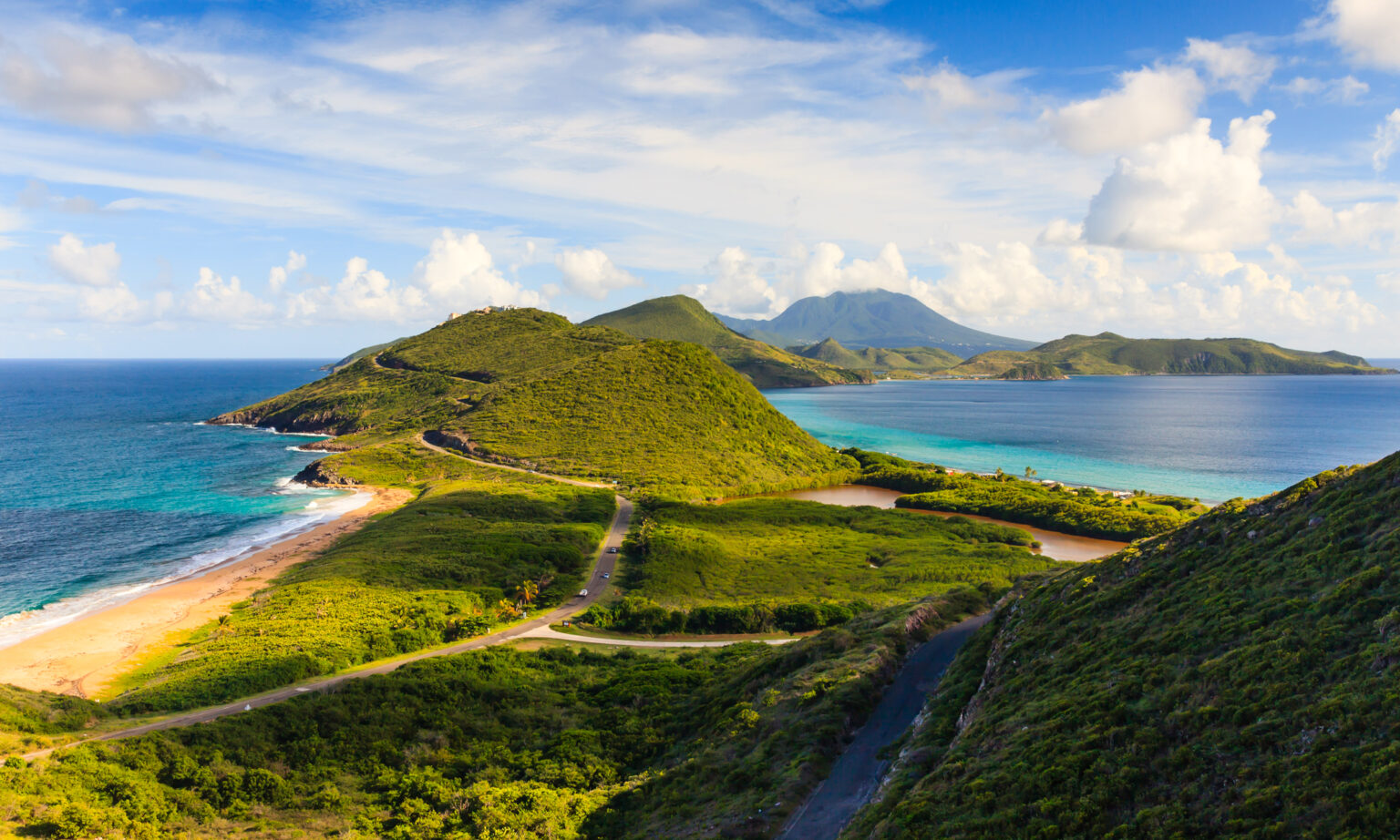
St. Kitts and Nevis created citizenship by investment in 1984. Every other Caribbean CBI programme came after it. Forty years on, the programme ranks first in the 2025 CBI Index for the fourth consecutive year, and following its restructure as a statutory body under the Citizenship by Investment Unit Act 2024, applications grew by 169 percent in the final quarter of that year. In February 2026, the United States formally rescinded its 2014 FinCEN advisory concerning the programme, recognising the comprehensive reforms to its governance and due diligence framework. This is a programme that has been improving, not standing still.
This guide breaks down everything you need to understand before making a decision. Everything in this guide can be found on the official website of the CIU ciu.gov.kn
What St. Kitts and Nevis citizenship gives you
The reason people pursue this citizenship varies significantly. For some it is primarily about the passport. For others it is the tax environment. For a smaller group, it is a genuine lifestyle decision about where to spend time or eventually retire. Understanding which of these matters most to you will shape which route makes the most sense.
The passport
The St. Kitts and Nevis passport provides visa-free or visa-on-arrival access to approximately 155 countries. The most significant of these are the 27 EU Schengen states for stays of up to 90 days in any 180-day period, the United Kingdom for stays of up to 180 days (an Electronic Travel Authorisation has been required since January 2025, but the UK remains visa-exempt entry), Singapore for up to 30 days, Hong Kong, Ireland, and the majority of the Caribbean and Latin America including Brazil, Argentina, and Chile.
The United States, Canada, Australia, and New Zealand require visas. This is the most common point of disappointment for applicants who want a St. Kitts passport to unlock visa-free US travel. It does not. A 10-year B-1/B-2 US visitor visa is obtainable through the US Consulate in Barbados, but the passport itself does not carry US visa-free access.
If US access is a primary concern, Grenada is the only Caribbean CBI programme that opens a pathway to US access through its E-2 Treaty Investor status. St. Kitts does not have that treaty. An adviser should clarify this early with any client for whom the US is a priority destination.
Citizenship is for life. It is inheritable. Dual citizenship is permitted. There is no mandatory residency requirement to maintain it. As a Commonwealth member, St. Kitts and Nevis citizenship also gives preferential access to study in the United Kingdom.
The tax environment
St. Kitts and Nevis has no personal income tax, no capital gains tax, no inheritance tax, no wealth tax, and no gift tax. Property tax on residential property is 0.2 percent of assessed value annually. For high-net-worth individuals with international income, business interests, or significant assets, this is often the most financially material reason to establish alternative citizenship here.
Tax residency and citizenship are different things. Holding a St. Kitts and Nevis passport does not automatically make you a tax resident of St. Kitts and Nevis, and it does not extinguish your existing tax obligations in your country of origin. How citizenship interacts with your current tax position requires advice from a qualified tax professional who understands your specific situation. This article does not constitute tax advice.
The country itself
St. Kitts is a 68-square-mile island with a population of roughly 35,000. Nevis, the sister island, is smaller still. The capital, Basseterre, is a working Caribbean city with an international airport, a deep-water port, established banking, and the full infrastructure a business or professional requires day-to-day. The island has a functioning secondary and tertiary education system, two medical schools with significant international student populations, and a private healthcare sector. English is the official language.
The Federation is politically stable, has no income tax, and derives significant revenue from tourism and the CBI programme itself. It is not a tax haven in the offshore sense, but it is genuinely tax-light by developed-world standards. For retirees, the combination of climate, infrastructure, proximity to North America and Europe by air, and the tax environment is increasingly compelling.
Who qualifies
The main applicant must be at least 18 years old and make a qualifying investment. Beyond those two requirements, the CIU applies a character-based eligibility test. The following disqualify an applicant:
Having been denied citizenship of any country. Having been denied a visa to any country to which St. Kitts and Nevis citizens have visa-free travel, unless they subsequently obtained that visa. Having a criminal record. Being the subject of an ongoing criminal investigation. Having been declared bankrupt within the ten years preceding the application. Being involved in any activity likely to cause disrepute to St. Kitts and Nevis.
Banned nationalities. Applications are not accepted from citizens of Afghanistan, Belarus, Iran, Iraq, North Korea, and Russia, The band list: ciu.gov.kn/eligibility-criteria.
Who can be included as a dependant? The main applicant may include in the same application: a spouse; children under 18; children aged 18 to 25 who are in full-time attendance at a recognised secondary or tertiary educational institution and are fully financially supported by the main applicant; children aged 18 or over who are physically or mentally challenged; and parents or parents-in-law aged 55 or over who live with and are fully supported by the main applicant.
The parent age was reduced from 65 to 55 in October 2024. This is a meaningful change for applicants whose parents are in their late 50s or early 60s.
Cryptocurrency. The CIU accepts cryptocurrency as a partial source of wealth. A separate proof of wealth not derived from cryptocurrency is also required, and additional due diligence fees apply to crypto-sourced funds.
The four investment routes
All four routes lead to full citizenship. They differ in cost, structure, financial characteristics, and what happens to the money. The right choice depends on the applicant’s priorities. Here is a clear-eyed overview of each, followed by links to guides for each route.
Sustainable Island State Contribution (SISC)
A non-refundable contribution to the government’s Federal Consolidated Fund. The money goes to one of seven priority areas: local food production, green energy, economic diversification, sustainable industry development, the creative economy, Covid-19 recovery, and social protections. The applicant has no say in which pillar receives their funds.
Minimum: US$250,000 (EC$675,000) for a single applicant or a family of up to four. Additional dependants beyond four: US$25,000 per child under 18, US$50,000 per dependant aged 18 or over. No post-approval state fees. Due diligence: US$10,000 main applicant, US$7,500 per dependant aged 16 or over.
The SISC is clean and direct. It could be the most direct for applicants who want the most efficient path to a passport without taking on an asset.
Full guide: St. Kitts CBI: the SISC explained in full
Public Benefit Option (PBO)
A contribution of US$250,000 (EC$675,000) directed to one of five specific government-approved projects: the Basseterre High School rebuilding project, the National Housing Corporation, the Prime Creative Arts Centre, the Robert L. Bradshaw Airport Expansion, and the Royal St. Kitts Beach Resort. Unlike the SISC, the applicant selects which project receives their contribution.
The PBO minimum is the same as the SISC, but the total cost is higher for applicants with dependants because post-approval state fees apply: US$15,000 per spouse, US$10,000 per dependant under 18, US$15,000 per dependant aged 18 or over. There is no main applicant post-approval fee on this route.
The PBO appeals to applicants who want to see their contribution go toward something specific. The airport expansion and the school rebuilding project are particularly tangible: infrastructure any future visitor to St. Kitts will see and use.
Full guide: St. Kitts CBI: the Public Benefit Option explained
Developer’s Real Estate Investment
The purchase of a unit in one of the CIU’s 34 officially approved developments. Minimum: US$325,000 (EC$877,500) paid to the developer. The property must be held for seven years before resale, after which citizenship is retained permanently. During the holding period, rental income is possible depending on the development.
Post-approval state fees: US$25,000 main applicant, US$15,000 spouse, US$10,000 per dependant under 18, US$15,000 per dependant aged 18 or over. Due diligence: US$10,000 main applicant, US$7,500 per dependant 16 or over. Additional property costs apply: compulsory insurance fund contributions and conveyance fees.
This is the only route where the qualifying investment is potentially recoverable. At year seven, the property is sold and the proceeds returned. A well-chosen unit in a strong development can generate rental income during the hold and appreciate in value over the seven years. The real estate route is not primarily an investment play, but it is the only route that gives the applicant an asset rather than a sunk cost.
The CIU’s full approved development list is at ciu.gov.kn/development-options. For property availability, current pricing, and honest assessments of which developments are performing, SKN Real Estate is a licensed brokerage based on the island and works directly across all major approved developments.
Full guide: St. Kitts CBI real estate: every approved development, costs and how to buy
Private Real Estate Investment
The purchase of a property designated as Approved Private Real Estate. Two options: a condominium unit or share for a minimum of US$325,000 (EC$877,500), or a single-family private home for a minimum of US$600,000 (EC$1,620,000). Same post-approval state fees as the developer route. Full freehold title. Seven-year hold.
Not every property worth US$600,000 qualifies. The specific property must be officially designated as Approved Private Real Estate. The alien landholding licence is waived on all CBI-approved property, and properties in Frigate Bay and the South East Peninsula carry an independent Special Development Zone exemption under the Aliens Land Holding Regulation Act Cap. 10.01 regardless of CBI status.
Full guide: St. Kitts CBI real estate: every approved development, costs and how to buy
What it really costs
The minimum investment figures quoted across most CBI websites are the qualifying investment only. The total all-in cost is always higher once due diligence fees, post-approval state fees (where they apply), legal and conveyancing fees, and agent fees are included. Here is what the real numbers look like for the most common applicant profiles.
Single applicant, SISC: US$250,000 contribution + US$10,000 due diligence + agent and legal fees (typically US$5,000 to US$8,000) = approximately US$265,000 to US$268,000 all in.
Family of four (2 adults, 2 children under 16), SISC: US$250,000 + US$10,000 main applicant due diligence + US$7,500 spouse due diligence + agent and legal fees = approximately US$277,500 to US$283,000 all in. Children under 16 do not incur due diligence fees.
Single applicant, developer real estate, US$325,000 unit: US$325,000 property + US$10,000 due diligence + US$25,000 post-approval state fee + US$10,000 to US$12,000 legal and conveyancing = approximately US$370,000 to US$372,000 all in.
Family of four (2 adults, 2 children under 18), developer real estate, US$325,000 unit: US$325,000 + US$10,000 + US$7,500 + US$25,000 + US$15,000 + US$10,000 + US$10,000 + US$12,000 to US$15,000 legal = approximately US$414,500 to US$417,500 all in.
The difference between the SISC and the real estate route for a family of four is approximately US$134,000 to US$140,000. That difference buys a property asset. Whether that property will recover US$134,000 of value through rental income and appreciation over seven years depends entirely on the development chosen and how the St. Kitts market performs. It is not guaranteed. It is possible in the right development.
Full cost breakdown: St. Kitts CBI: the complete cost guide for every route and family size
The process from start to passport
The CIU describes the process in five steps. Here is what each step involves in practice.
Before you start: choose an Authorised Agent. Applications cannot be submitted directly to the CIU. They must go through a licensed Authorised Agent. The agent prepares your application, liaises with the CIU on your behalf, and coordinates the investment transaction. The agent’s fee is separate from all CIU fees and varies by agent. The full authorised agent list is at ciu.gov.kn/authorised-agents-list.
If you are pursuing a real estate route, the property selection process runs in parallel with the citizenship application. Identifying and reserving a qualifying property is not Step 1, 2, 3, or 4 in the CIU’s process. It is something that happens alongside the application, not after it. Treat it as equal-priority from day one.
Step 1: Document preparation. You and your agent compile all required documents: valid passport, birth certificate, police clearance certificate from every country of residence in the past ten years, proof of address, medical certificate, and proof of source of funds. For financially sponsored applications, additional documents are required from the financial sponsor. This step typically takes two to four weeks depending on how quickly documents can be obtained and certified.
Step 2: Application submission. Your agent submits the complete application to the CIU with the due diligence fees. The CIU acknowledges receipt. The clock starts here for the 120 to 180 day processing window.
Step 3: Due diligence and interview. The CIU conducts its due diligence process, including background checks by independent third-party firms. All main applicants must attend a mandatory interview, conducted virtually, in person in St. Kitts, or at another approved location. Dependants aged 16 or over may also be required to attend. This is the stage where most applications that have problems will surface. A clean application with complete documentation moves through smoothly.
For real estate routes, a reservation deposit (typically 10 percent of the property price) is paid at this stage to hold the selected unit. No major capital is committed before Approval in Principle.
Step 4: Approval in Principle and investment. The CIU issues an Approval in Principle letter. This is the formal confirmation that citizenship will be granted on completion of the investment. At this point the investment is made: SISC and PBO contributions transfer, or the property balance and post-approval state fees are paid. Legal and conveyancing work for real estate buyers completes here.
Step 5: Certificate of Registration and passport. The Certificate of Registration is the citizenship document. It can be collected in St. Kitts and Nevis or at an approved embassy or consulate. The passport application follows. Many applicants apply for the passport at the same time as collecting the Certificate.
Total timeline: The CIU will advise within 120 to 180 days of acknowledging the application whether it is approved in principle, denied, or delayed for cause. Adding document preparation time before submission and passport processing time after approval, allow a few months from first engagement with an agent to passport in hand as a realistic planning figure.
Post-citizenship additions. If you want to add a dependant after your citizenship is granted, the post-citizenship addition route applies. Adding a spouse or other qualified dependant after Approval in Principle: US$30,000 plus standard processing fees. Adding a newborn child under three years of age born after the Certificate is issued: US$7,500 plus standard fees. Dependants who were eligible at the time of the original application but were not included cannot use the post-citizenship addition route and must apply via a sponsored application.
Name changes. The CIU no longer handles name change applications. Name changes are processed by the Passport Office at renewal. Previous names appear on the Observation Page of the new passport.
The programme in 2026: what has changed and what is coming
Several significant developments have occurred since late 2024.
Investment thresholds reduced, October 2024. Statutory Rules and Orders No. 43 of 25 October 2024 reduced the developer real estate minimum from US$400,000 to US$325,000, the private single-family home minimum from US$800,000 to US$600,000, and lowered the parent eligibility age from 65 to 55. These were meaningful reductions that brought a wider group of applicants and properties within reach of the programme.
FinCEN advisory rescinded, 24 February 2026. The United States Financial Crimes Enforcement Network formally removed its advisory FIN-2014-A004, which had been in place for over twelve years. The CIU’s official statement confirmed the rescission followed comprehensive reforms: the transition to a statutory body with a Board of Governors, upgraded due diligence frameworks, mandatory applicant interviews, enhanced international compliance cooperation, mandatory biometric data collection, and partnership with leading external due diligence firms. The rescission removes a significant reputational overhang that had made some US-connected applicants and advisers cautious about the programme.
ECCIRA Bill passed, 17 October 2025. The National Assembly passed the Eastern Caribbean Citizenship by Investment Regulatory Authority Bill 2025. ECCIRA establishes a unified regional regulator covering CBI programmes in Antigua and Barbuda, Dominica, Grenada, Saint Lucia, and St. Kitts and Nevis. The intent is to harmonise due diligence standards and governance across the Caribbean CBI market, reducing the reputational risk that comes from inconsistent standards across neighbouring programmes.
Biometric passport programme, launched 14 April 2026. The Ministry of National Security in partnership with the CIU launched the National Biometric Enrolment and Passport Modernisation Programme. This is a mandatory update for all CBI citizens, with a hard deadline of 31 July 2027. Non-compliant passports are deactivated from 1 August 2027. Native-born citizens are encouraged to enrol but are not subject to this deadline.
Enrolment fees: first adult (16 or over) US$2,500, second adult in the same family US$2,000, children under 16 US$1,300. These are all-inclusive, covering both biometric enrolment and the passport upgrade. Data is captured once and does not require re-enrolment at renewal. Appointment booking opened 20 April 2026. Phase 1 locations: the CIU office in St. Kitts. From 1 May 2026: government-designated service providers in Asia and UAE, with further global expansion to follow. Enquiries: biometrics@sknciu.com
The residency question. In October 2025 the CIU published an official statement confirming it is evaluating the potential introduction of a physical presence requirement. The statement was precise about what this is and is not: “There will be no sudden shifts. When the inclusion of a residency requirement is pursued, adequate lead time and clear guidance will be provided to all stakeholders to allow for operational adjustments.” As of April 2026, no requirement has been enacted and no timeline has been announced. The February 2026 FinCEN rescission statement described a future “mandatory genuine-link requirement” with “structured physical presence” as part of the programme redesign, but it has not been implemented. Advisers should flag this as a watch item for clients, not a present obligation.
More detail: St. Kitts CBI: programme news and updates 2025 to 2026
If you want to go deeper into see the following:
Investment Routes in depth
- The SISC: how it works, who it suits, and what it costs in full
- The Public Benefit Option: the five approved projects explained
- Developer real estate: every approved development, pricing, and how to buy
- The complete cost guide: every route, every family size, full worked examples
The application
- The application process step by step: documents, interviews, and timelines
- How to choose a CBI Authorised Agent
- Eligibility in detail: who qualifies, who does not, and edge cases
- What the due diligence process involves
The passport and what it gives you
- Full visa-free access list: every country, every condition
- St. Kitts vs Grenada, Dominica, Antigua, and Saint Lucia: which programme fits which buyer
- Tax implications: what St. Kitts citizenship means for your tax position
Specific buyer profiles
- Citizenship by investment for families: dependants, costs, and planning
- The investor’s guide: real estate route returns, rental income, and resale
- Retiring to St. Kitts: what citizenship by investment means for retirees
- US citizens and the St. Kitts CBI programme: what you need to know
Living in St. Kitts
- Living in St. Kitts and Nevis: a complete guide
- The St. Kitts property market in 2026
- Buying property in Frigate Bay
Frequently asked questions
What is the minimum investment to get St. Kitts citizenship in 2026?
The minimum qualifying investment is US$250,000 via the SISC or PBO, US$325,000 via developer real estate or a private condominium, or US$600,000 for a private single-family home. These figures are the qualifying investment only. Total all-in costs are higher once due diligence, post-approval state fees, and legal costs are included. See the full cost guide for worked examples across every route and family size.
How long does the St. Kitts CBI process take?
The CIU processes applications within 120 to 180 days of acknowledging the submission. Adding document preparation before submission and passport processing after approval, a realistic planning figure from first engagement with an agent to passport in hand is six to nine months.
Do I need to visit St. Kitts to apply or receive citizenship?
No. The mandatory interview can be conducted virtually. For real estate buyers, property viewings can be done via WhatsApp video. The Certificate of Registration can be collected at an approved embassy or consulate. Many applicants complete the entire process without visiting the island until after they have their passport.
Which nationalities cannot apply?
Citizens of Afghanistan, Belarus, Iran, Iraq, North Korea, and Russia. This is confirmed on the CIU’s official Eligibility Criteria page.
Can my parents be included in my application?
Yes, if they are aged 55 or over, live with you, and are fully financially supported by you. The age was reduced from 65 to 55 in October 2024. The standard dependent due diligence fees and, depending on the route, post-approval state fees apply.
Is there a residency requirement to maintain citizenship?
No, not currently. The CIU confirmed in October 2025 it is evaluating a future physical presence requirement but stated explicitly that any change will come with adequate advance notice. As of April 2026, no requirement is in force.
What are the biometric passport requirements for CBI citizens?
All CBI citizens must complete biometric enrolment by 31 July 2027. Passports of non-compliant CBI citizens are deactivated from 1 August 2027. Fees: first adult US$2,500, second adult in the same family US$2,000, children under 16 US$1,300. Appointment booking opened 20 April 2026. Contact biometrics@sknciu.com.
What does St. Kitts citizenship give me that other Caribbean programmes do not?
The St. Kitts programme has the longest track record, the strongest due diligence reputation, and the clearest legal framework. The FinCEN rescission in February 2026 is a significant marker of international regulatory confidence. It ranks first in the 2025 CBI Index. The principal limitation compared to some other Caribbean programmes is the absence of a US E-2 Treaty Investor pathway, which Grenada offers. See the full Caribbean CBI comparison for a route-by-route analysis.
Is St. Kitts CBI suitable for a family with adult children?
Yes. Adult children aged 18 to 25 can be included if they are in full-time attendance at a recognised educational institution and fully financially supported by the main applicant. Adult children who are physically or mentally challenged can be included regardless of age. See the full families guide for a detailed treatment of dependent inclusion and cost implications.
All programme information in this guide is sourced directly from ciu.gov.kn. This article is for information only and does not constitute legal, financial, or tax advice. Last updated: April 2026.